
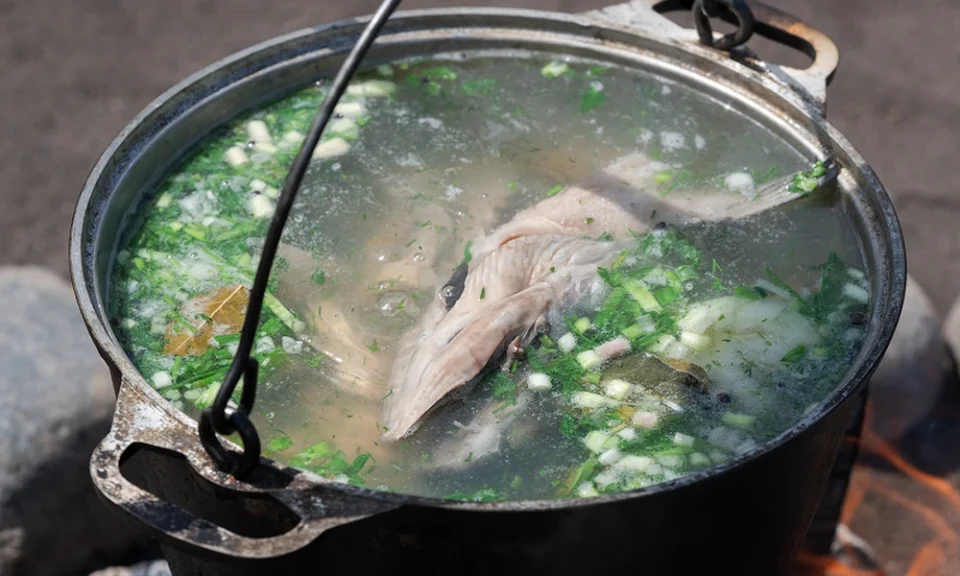
A good fish soup draws its flavour from more than just the flesh. The head, bones, skin and even the fins each release something into the pot, from gelatin that gives the broth body to fat that carries flavour. Many easy fish soup recipes call for “fish” without saying which part, yet knowing how each section behaves in simmering water can change the taste and texture of the final bowl. Looking at the fish from head to tail shows what every part brings.
Parts That Build the Broth
Some parts of the fish are mostly bone, cartilage and connective tissue. They are rarely eaten on their own but do most of the work in creating a flavourful stock.
Head
The head is one of the richest parts of the fish for soup. It contains cartilage, fat and collagen, which break down during cooking into gelatin and give the broth a fuller, slightly silky feel. The cheeks also hold small pockets of tender meat that many cooks prize. The eyes and the area around them are especially gelatinous.
Bones and Frame
The backbone and rib cage add a clean, savoury flavour. Marrow and connective tissue around the spine release flavour as they simmer, and frying the bones lightly before adding water can produce a cloudier, milkier stock.
Tail and Fins
The tail is bony and muscular, with thin strips of firm meat. Together with the fins, it adds extra collagen and a mild sweetness to the stock.
Skin
Skin contains collagen and a layer of fat just beneath it. Left on the fillet, it helps the flesh hold together in the soup and adds a subtle richness to the broth.
Parts That Go Into the Bowl
Other parts of the fish are meant to be eaten, adding texture and substance to each serving. Once a fish arrives through fresh whole fish delivery, these are the sections most often portioned for the table.
Fillet or Loin
The thick, boneless flesh along the back is the main eating portion. It can be sliced thinly for quick-cooking clear soups or cut into larger chunks for stews and chowders. Lean fillets give clean, delicate pieces, while oilier fish produce softer, more flavourful flesh.
Belly
The belly is soft and fatty, with a higher oil content than the fillet. It stays moist during simmering and adds richness to both the meat and the broth. Since it is so tender, belly pieces are usually added towards the end so they do not fall apart.
Collar
Located just behind the head, the collar combines tender meat with small bones and fat. It holds up well to longer cooking and is often added to fish head soups and curries. Larger fish such as red snapper or grouper tend to have collars with more meat.
Parts to Remove Before Cooking
Not every part of the fish is good for the pot. Some can make the soup bitter, cloudy or unpleasant, so it helps to remove the following before cooking:
- Gills, which can give the broth a bitter, muddy taste.
- The dark bloodline along the backbone, which can add a strong, fishy flavour.
- Internal organs, which spoil quickly and affect the taste.
- Scales, which are unpleasant to eat if left on the skin.
Rinsing the head and frame in cold water after cleaning helps produce a clearer broth.
From Head to Tail in the Pot
Each part of a whole fish has its own role in soup. The head, bones, tail, fins and skin build body and flavour in the broth, while the fillet, belly and collar provide the pieces that go into each bowl. Understanding these roles makes it easier to plan a soup that uses the whole fish with little waste.
Visit Catch of the Day to browse our selection of whole fish online and find the right size for your next pot of soup.
