
Setting up a successful bar operation requires careful consideration of numerous factors, but few elements are as critical as your draft beer delivery system. A well-designed and properly maintained draft system ensures quality beverages for your customers and maximizes profitability by reducing waste and operational inefficiencies. This comprehensive guide walks bar owners and managers through the essential aspects of draft beer systems, from initial planning to long-term maintenance.
Essential components
A complete draft system consists of several interdependent components:
- Refrigeration system
The walk-in cooler or dedicated keg refrigerator maintains kegs at optimal storage temperature. A glycol chiller becomes necessary for systems with distant tap locations to maintain temperature throughout the beer lines.
- Gas delivery system
Carbon dioxide (CO2) and/or nitrogen (N2) tanks, regulators, and gas lines maintain proper pressure to push beer through the system while preserving carbonation. Different beer styles require specific gas blends and pressure settings.
- Beer lines and faucets
Beer travels through food-grade tubing to the dispensing faucets. Line diameter, material, and length must be precisely calculated based on system design and beer characteristics.
- Drip trays and drainage
Proper drainage systems collect spilt beer and cleaning solutions, directing them to floor drains or drainage receptacles while keeping service areas clean.
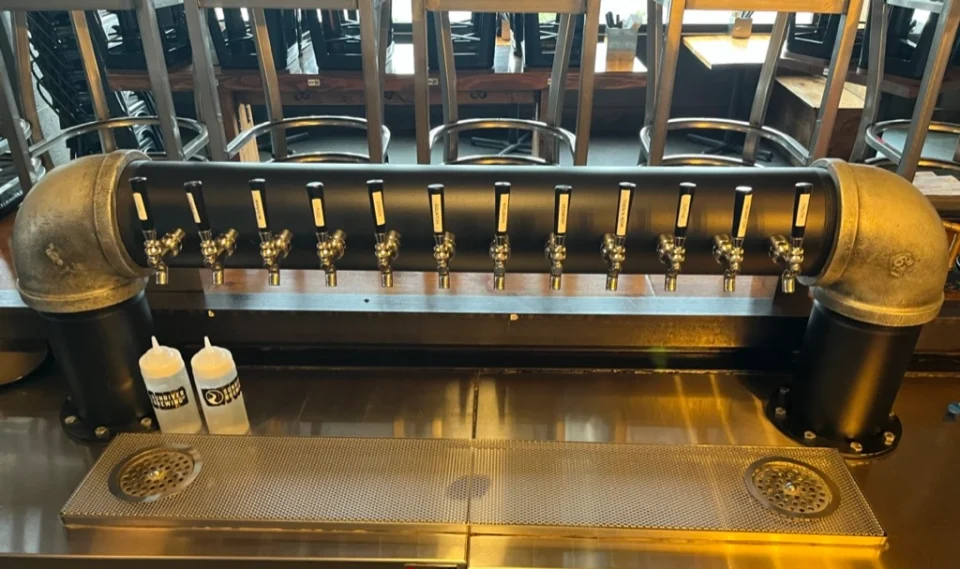
The visible and customer-facing component in modern bars is the tap wall. New technology is shaping beverage service trends, including Draft Beer Tap Wall Systems. These systems typically feature custom-designed arrays of taps mounted on decorative backdrops, often incorporating digital menu displays showing beer information, pricing, and availability. Beyond aesthetics, these integrated solutions deliver significant operational benefits through organized line management, optimized cooling, and easier maintenance access.
Installation process
Professional installation is strongly recommended for commercial draft systems. The process typically involves:
- Site preparation – Ensuring adequate electrical service, drainage, ventilation, and structural support
- Cooler installation – Setting up refrigeration for keg storage
- Line installation – Running properly insulated beer lines through walls and under flooring
- Tap mounting – Securing faucets and drip trays at service points
- Gas system setup – Installing gas tanks, regulators, and safety equipment
- System balancing – Adjusting pressure settings for each beer line
- Testing and quality control – Ensuring proper flow, temperature, and carbonation
Maintenance Requirements
Regular maintenance ensures quality and prevents costly issues:
Daily maintenance
- Faucet cleaning to remove beer residue
- Visual inspection of all visible components
- Checking gas levels and system pressure
Weekly maintenance
- Line cleaning using specialized chemicals and procedures
- Faucet disassembly and detailed cleaning
- Drip tray and drain cleaning
Monthly maintenance
- Complete system inspection
- Refrigeration system check
- Temperature verification throughout the system
- Regulator and pressure gauge calibration
Quarterly maintenance
- Professional deep cleaning of the entire system
- Replacement of washers, O-rings, and other worn components
- Calibration of all mechanical components
Troubleshooting common issues
- Foamy beer – Typically caused by temperature issues, improper pressure, dirty lines, or faucet mechanical problems.
- Flat beer – Usually, it results from insufficient pressure, gas leaks, or improper temperature.
- Off-flavors – Often indicates bacterial contamination from inadequate cleaning or issues with the beer itself.
- Slow pours – May signal line restrictions, keg problems, or insufficient pressure.
Ongoing maintenance costs typically range from 2-5% of annual beer sales, but this investment pays dividends through reduced waste and consistent quality. The long-term benefits of quality and reduced product waste make a professional draft system essential for success.
