
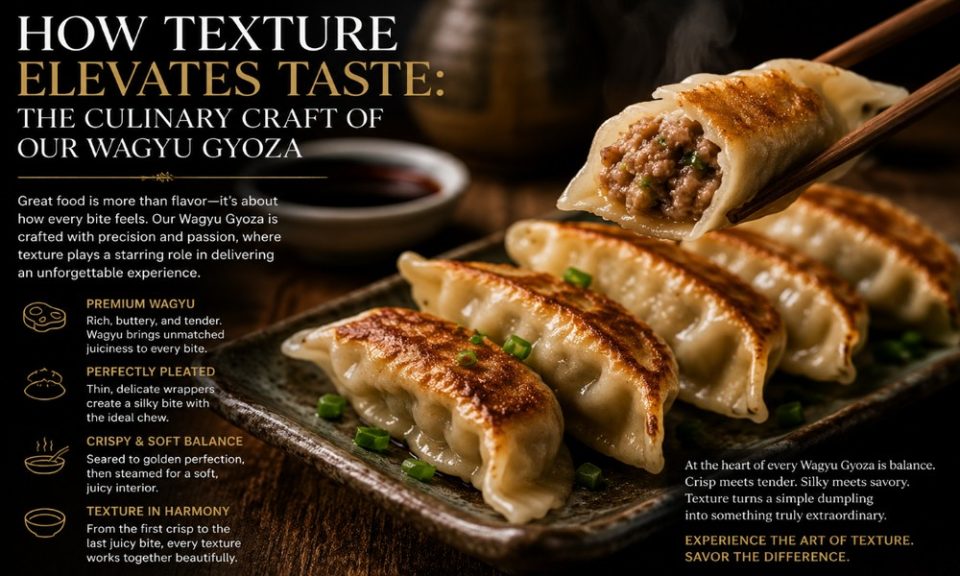
Food is not only about flavor. Texture plays a major role in how people experience every bite. A dish can have rich seasoning and high-quality ingredients, but if the texture feels flat, the experience may not feel complete. This is especially true with wagyu gyoza, where the crisp wrapper, tender filling, and juicy center all work together.
Wagyu gyoza is more than a simple dumpling. It is a balance of contrast. The outside should have a light crispness. The inside should feel soft, savory, and rich. When texture and flavor meet properly, each bite feels layered and satisfying.
Why Texture Matters in Gyoza
Gyoza is loved because it gives several textures at once. The bottom is usually pan-seared until golden and crisp. The top stays soft and slightly chewy from steaming. The filling remains moist, warm, and tender inside.
This contrast is what makes gyoza so enjoyable. A completely soft dumpling may taste good, but it can feel heavy. A dumpling that is only crispy may lose the comfort people expect. The best version gives both.
With wagyu, texture becomes even more important because the meat is naturally rich. The wrapper and cooking method help balance that richness, so the gyoza does not feel too heavy.
The Role of the Wrapper
The wrapper is the first texture people notice. It should be thin enough to feel delicate but strong enough to hold the filling. If it is too thick, it can overpower the inside. If it is too thin, it may tear during cooking.
A good wrapper gives structure. It holds the wagyu filling in place and creates the golden base when pan-fried. That crisp bottom adds a satisfying bite before the soft filling follows.
The wrapper also helps control moisture. As the gyoza cooks, steam softens the upper part while direct heat crisps the bottom. This creates the signature mix of tender and crunchy textures.
Why Wagyu Changes the Filling
Wagyu is known for its richness, tenderness, and marbling. In gyoza, this brings a deeper flavor and a softer bite compared to leaner fillings. The fat in wagyu helps keep the filling juicy and flavorful.
But richness must be managed. If the filling is too dense, the gyoza can feel heavy. That is why balance matters. Finely chopped vegetables, aromatics, and seasoning help lighten the texture. Ingredients like cabbage, garlic, ginger, scallions, or mushrooms can add freshness, moisture, and contrast.
The goal is not to hide the wagyu. The goal is to support it. The filling should feel tender and savory without becoming greasy or overly soft.
Cooking Method Creates the Contrast
The classic gyoza cooking method usually combines frying and steaming. First, the dumplings are placed in a hot pan to crisp the bottom. Then water is added, and the pan is covered so the dumplings steam. Once the water evaporates, the bottom can crisp again.
This process creates the texture gyoza is known for. The base becomes golden and lightly crunchy. The wrapper stays soft around the sides and top. The filling cooks gently inside, keeping it juicy.
For wagyu gyoza, this method works especially well. The crisp bottom balances the rich meat, while the steamed portion keeps the dumpling soft and comforting.
Flavor Feels Stronger with the Right Texture
Texture affects how flavor is noticed. A crisp bite can make savory flavors feel brighter. A juicy filling can make the meat taste richer. A tender wrapper can make the whole dish feel more refined.
When wagyu gyoza is cooked well, the flavor does not arrive all at once. First comes the crisp edge. Then the wrapper gives way. Then the warm filling releases its richness. This sequence makes the bite more interesting.
That is why texture is not just a detail. It shapes the entire eating experience.
Pairing Sauce with Texture
A dipping sauce can also improve the texture experience. A light sauce made with soy, vinegar, chili oil, or citrus can cut through the richness of wagyu. It adds brightness without covering the filling.
The sauce should complement the gyoza rather than soak it. Too much sauce can soften the crisp bottom and hide the careful texture. A small dip is usually enough.
Final Thoughts
Wagyu gyoza shows how texture can elevate taste. The dish works because every part has a purpose. The wrapper brings structure. The crisp bottom adds contrast. The filling brings richness and tenderness. The sauce adds balance.
A great gyoza is not only about what it tastes like. It is about how it feels from the first bite to the last. When texture and flavor are carefully balanced, wagyu gyoza becomes a small dish with a big, memorable impact.
This post was written by a professional at Fortu. Fortu stands out among the top Restaurants St Petersburg FL, offering an elevated Pan-Asian dining experience in the heart of St. Petersburg, Florida. Celebrating Asia’s vibrant and diverse culture, Fortu introduces bright and bold flavors to a bright and bold city with a menu of locally and sustainably sourced options, from small bites to hearty delicacies. Whether winding down from a beach day or celebrating a special occasion, guests can enjoy a lush, alluring atmosphere and an authentic taste of Asia’s divine cuisine at one of the finest Restaurants In Downtown St Petersburg FL.
